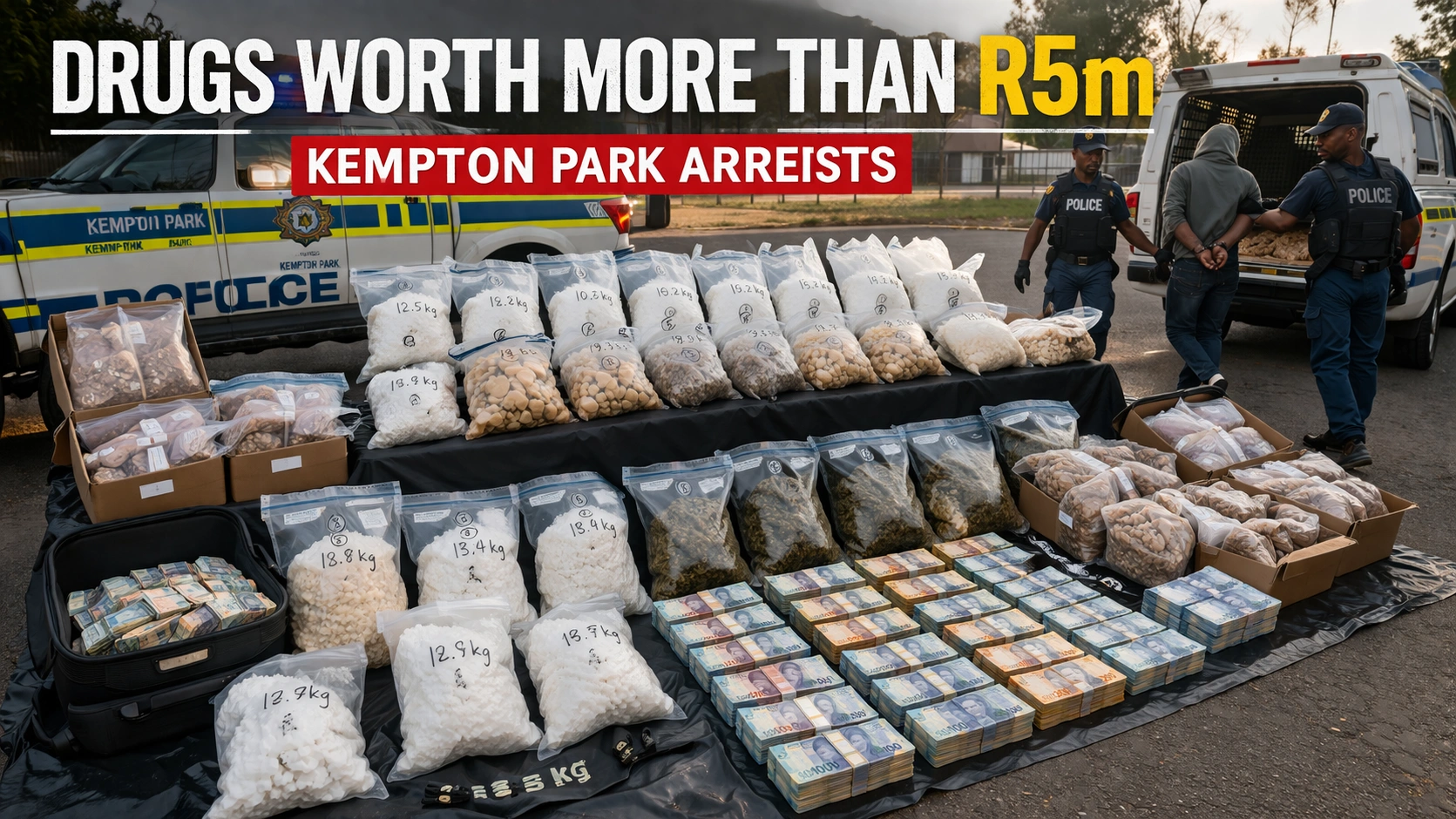
Possession of Drugs Worth More Than R5m: What the Kempton Park Arrests Reveal About South Africa’s Evolving Drug Trade

The recent case involving the possession of drugs worth more than R5m at OR Tambo International Airport is more than just another headline about crime—it is a window into the shifting dynamics of global drug trafficking networks and South Africa’s increasingly strategic role within them. As five South African women prepare to appear in the Kempton Park Magistrate’s Court, the incident highlights how traffickers are adapting their methods, recruiting new profiles, and exploiting international travel routes in ways that demand closer scrutiny.
This case comes at a time when law enforcement agencies are intensifying efforts to disrupt trafficking pipelines running through major transport hubs. The scale, coordination, and concealment methods involved point to organized networks rather than isolated criminal activity. For policymakers, security agencies, and the public, understanding the deeper implications of this incident is critical—not only for crime prevention but also for anticipating future trends in transnational drug operations.
South Africa as a Strategic Transit Hub
South Africa has long been positioned as both a destination and transit point in the global drug trade. Its advanced infrastructure, busy ports, and extensive air travel connections—especially through OR Tambo International Airport—make it a key logistical node.
The case involving the possession of drugs worth more than R5m underscores how traffickers continue to leverage this connectivity. According to preliminary reports, the suspects were allegedly en route to China via Dubai—a route that reflects a broader pattern linking Africa, the Middle East, and Asia in drug distribution networks.
Several contextual factors explain this trend:
- Geographic advantage: South Africa connects major global trade corridors.
- High passenger volumes: Busy airports provide cover for illicit movement.
- Established criminal networks: Transnational syndicates use local operatives to minimize risk.
Recent seizures reinforce this pattern. Earlier in March, authorities intercepted crystal meth worth R2.2 million destined for the Philippines, along with dagga shipments valued at R672,000 originating from Morocco. These incidents collectively suggest that South Africa is not just a passive transit point but an active intersection in a global supply chain.
A Shift Toward High-Risk Smuggling Methods
One of the most striking aspects of the possession of drugs worth more than R5m case is the method of concealment. The drugs were reportedly hidden in sneakers, underwear, and even internally—techniques commonly associated with so-called “drug mules.”
This approach reflects a broader shift in trafficking strategies:
1. Increased Reliance on Human Couriers
Traffickers are increasingly using individuals rather than cargo shipments for high-value drugs. While cargo can be scanned and tracked, human carriers introduce unpredictability.
2. Diversified Concealment Techniques
The use of multiple hiding methods in a single operation suggests an attempt to bypass detection technologies and confuse screening processes.
3. Higher Risk, Higher Reward Strategy
Transporting drugs internally or on the body carries significant health risks for couriers, indicating the high value of the shipment and the desperation—or coercion—of those involved.
These tactics signal a calculated evolution. Rather than relying solely on large shipments, traffickers are fragmenting distribution across multiple carriers, reducing the likelihood of total loss if one courier is intercepted.
The Role of Women in Drug Trafficking Networks
The arrest of five women in connection with the possession of drugs worth more than R5m raises important questions about recruitment patterns within trafficking networks.
Historically, women have often been underrepresented in public narratives about drug trafficking. However, recent data and case trends suggest a shift:
- Targeted recruitment: Women are sometimes perceived as less suspicious by authorities.
- Economic vulnerability: Financial pressures can make individuals more susceptible to recruitment.
- Coercion and exploitation: Some participants may be victims of manipulation or trafficking themselves.
This does not diminish criminal responsibility, but it complicates the narrative. Law enforcement agencies increasingly face the dual challenge of prosecuting offenders while identifying potential victims of organized crime.
Understanding these dynamics is essential for developing more effective interventions—both punitive and preventative.
Coordination and Intelligence-Led Policing
The arrests at OR Tambo were the result of a joint operation between the South African Police Service and Airports Company South Africa, highlighting the importance of inter-agency collaboration.
In cases involving the possession of drugs worth more than R5m, success often hinges on:
Intelligence Gathering
Pre-emptive information allows authorities to identify suspects before they board flights.
Advanced Screening Technologies
Modern scanning systems can detect concealed substances, even when hidden in unconventional ways.
International Cooperation
Given the cross-border nature of trafficking, collaboration with global partners is critical.
The fact that these arrests occurred before departure suggests a proactive approach rather than reactive enforcement. This is significant, as it indicates improved detection capabilities and intelligence sharing.
However, the persistence of such cases also reveals limitations. For every successful interception, there may be multiple undetected operations. This underscores the need for continuous adaptation in enforcement strategies.
Economic Scale and Market Demand
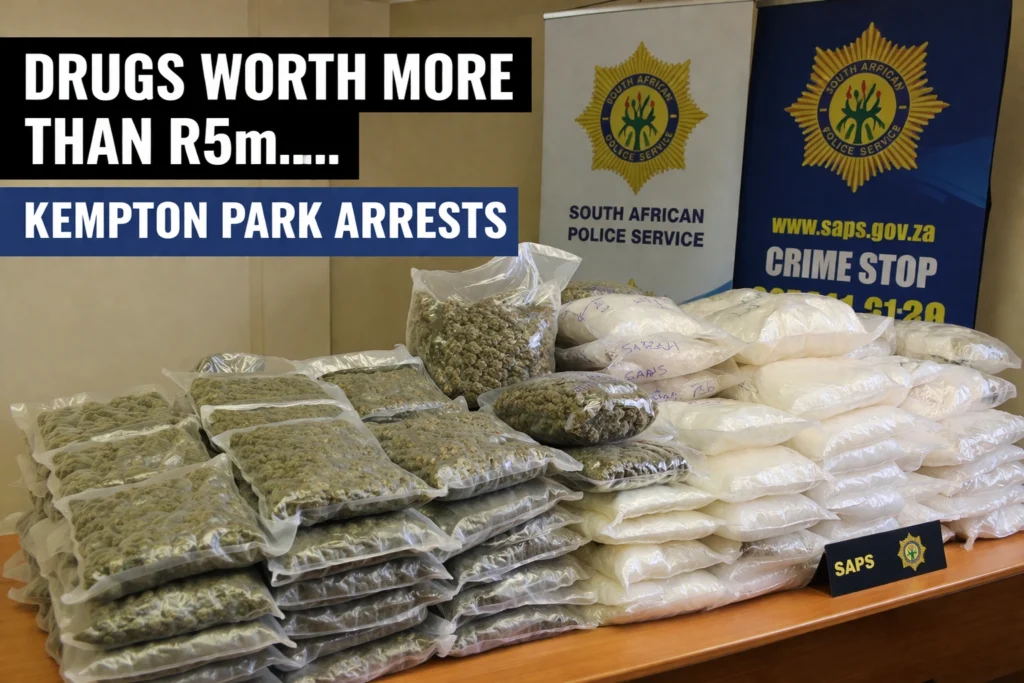
The possession of drugs worth more than R5m is not just a legal issue—it reflects the economics of a highly lucrative global industry.
Drug trafficking operates on fundamental market principles:
- High demand in destination countries drives supply chains.
- Price inflation occurs as drugs move across borders.
- Risk premiums increase the value of shipments.
For example, substances like crystal meth can multiply in value several times between origin and destination. This creates strong incentives for traffickers to take significant risks, including using human couriers.
The R5 million valuation in this case likely represents street value rather than production cost, highlighting the profit margins involved. Such margins sustain complex networks that span continents, making eradication particularly challenging.
Patterns Across Recent Seizures
When viewed alongside earlier March seizures, the possession of drugs worth more than R5m fits into a broader pattern:
- Multiple routes: South Africa is linked to Asia, the Middle East, and other African countries.
- Varied substances: Methamphetamine, cannabis, and other drugs are all part of the flow.
- Mixed transport methods: Both cargo and passenger-based smuggling are in use.
This diversity suggests that trafficking networks are highly adaptable. When one route or method becomes risky, alternatives are quickly deployed.
It also indicates that enforcement efforts, while effective in individual cases, must contend with a constantly shifting landscape.
What This Means Going Forward
The implications of the possession of drugs worth more than R5m case extend beyond the immediate legal proceedings. Several forward-looking insights emerge:
1. Increased Airport Security Scrutiny
Travelers can expect more rigorous screening, particularly on high-risk routes.
2. Greater Focus on Human Trafficking Links
Authorities may intensify efforts to distinguish between willing participants and coerced couriers.
3. Expansion of Intelligence Networks
Cross-border collaboration will likely deepen, especially with countries identified as key destinations.
4. Policy and Legal Adjustments
Governments may review sentencing guidelines and enforcement frameworks to address evolving tactics.
5. Public Awareness Campaigns
Educating individuals about the risks and consequences of acting as drug couriers could become a priority.
Ultimately, this case reinforces the idea that drug trafficking is not static. It evolves in response to enforcement, market demand, and global mobility. South Africa’s role within this system makes it both a target and a frontline defense point.
Beyond the Headlines
The story of five women facing charges for the possession of drugs worth more than R5m is, on the surface, a straightforward criminal case. But beneath it lies a complex web of global trade, economic incentives, human vulnerability, and institutional response.
What stands out is not just the scale of the operation, but the sophistication behind it. From concealment methods to international routing, every element reflects a system that is constantly adapting.
For South Africa, the challenge is twofold: to strengthen enforcement mechanisms while addressing the underlying conditions that allow such networks to thrive. For observers, the case serves as a reminder that drug trafficking is not just a law enforcement issue—it is a global phenomenon with local consequences.