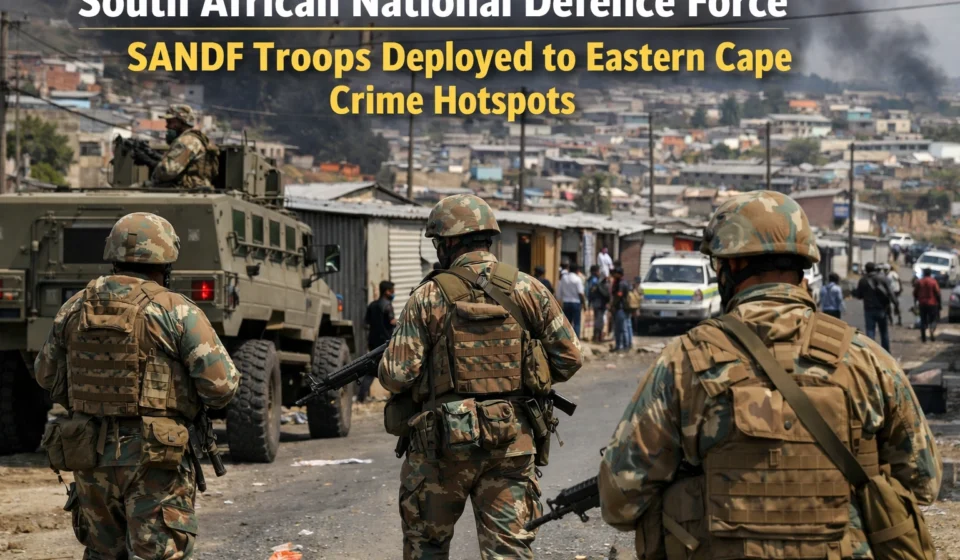

SANDF Troops Deployed to Eastern Cape Crime Hotspots: GQEBERHA – Nearly 300 South African National Defence Force (SANDF) soldiers have been deployed to crime-ridden areas in the Eastern Cape as part of a sweeping national anti-crime operation.
The deployment, which forms part of the larger Operation Prosper, officially commenced with a joint parade in Gqeberha on Thursday, 2 April 2026 . The mission is set to run until 31 March 2027 .
The Scale of the Deployment
Eastern Cape provincial commissioner Lieutenant General Vuyisile Ncata announced that 290 SANDF members will support the South African Police Service (SAPS) in addressing critical crime challenges in the region .
This forms part of a broader national effort. In total, President Cyril Ramaphosa has authorised the deployment of 2,200 soldiers across five provinces—namely Gauteng, the Free State, the Western Cape, the Eastern Cape, and North West—at an estimated cost of R823 million .
The soldiers officially began their duties in the province on Friday, 3 April 2026, after receiving orientation designed to ensure a seamless integration with police operations .
Targeted Areas and Mission Objectives
The operation will focus on specific high-crime areas within the province.
- Gelvandale, Chatty, and Kamesh in the Nelson Mandela Bay Metro
- Humansdorp and Jeffreys Bay in the Sarah Baartman District
The joint initiative aims to combat:
Provincial police spokesperson Nobuntu Gantana expressed confidence that the soldiers will make “an incredible impact” on fighting crime in these communities .
Supportive Role, Not a Takeover
A crucial distinction has been made regarding the soldiers’ authority. The SANDF members are deployed in a supportive role, acting as a “force multiplier” for the SAPS . The police remain the lead agency responsible for law enforcement.
“Since we work in separate spaces, we had to be orientated so that we know whatever we will be doing will be seamless so that we do not infringe upon the rights of the community,” Gantana said, adding that operations would adhere to the prescribed code of conduct .
Ncata similarly assured the public that SANDF members would act strictly within the law and with respect for human rights, emphasizing that the mission is “about restoring peace and dignity to communities” .
Community Response and Police Welcome
Police in the Eastern Cape have welcomed the deployment, describing it as a “much-needed enhancement” in crime-fighting efforts .
Eastern Cape police are confident that the increased manpower will help them “take back” communities from criminal elements .
Ncata has urged communities to cooperate with law enforcement and to reject mob attacks .
The Bigger Picture: A National Crackdown
Operation Prosper is President Ramaphosa’s direct response to a surge in violent organised crime that he says threatens the safety of South Africans and the authority of the state .
In a recent newsletter, the President explained that the deployment has become necessary due to:
- Escalating gang violence
- The proliferation of illegal firearms
- Rampant illegal mining, often linked to undocumented migration and extortion
National Police Commissioner General Fannie Masemola stated that the intervention aims to provide “space to the SA Police Service to deal with both street crime and to disrupt, disable and dismantle organised crime groupings” .
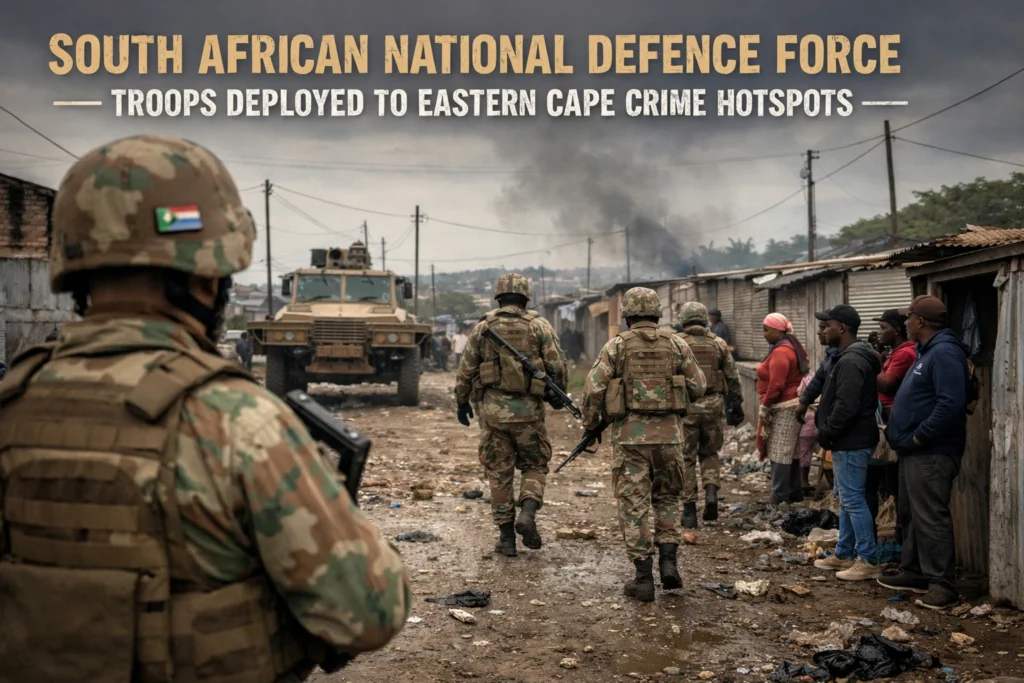
A Complex Threat Landscape
Authorities have described the criminal dynamics as “interconnected” and “persistent,” involving:
- Illegal mining fuelling violence in the Free State, Gauteng, and North West
- Gang-related shootings and extortion in the Western and Eastern Cape
- Attacks on critical infrastructure
- Corruption networks
“The scale, sophistication and persistence of these criminal activities have resulted in this extraordinary and integrated response by government,” Masemola said .
Concerns and Conditions
While the deployment has been largely welcomed by communities desperate for safety, some residents have expressed concerns about what happens when the soldiers leave.
Historically, previous deployments of soldiers to crime hotspots have brought temporary relief, only for criminal activity to resume once the military withdraws .
Police and military leadership have emphasized that they will operate with “humility and respect” towards civilians, with soldiers instructed to greet community members as they conduct operations .
Conclusion: A Test for Long-Term Stability
The deployment of SANDF troops to the Eastern Cape represents a significant escalation in the state’s efforts to combat organised crime. As the soldiers begin their patrols, the coming months will test whether this military intervention can provide lasting stability and whether it can successfully dismantle the criminal networks that have long plagued these communities.
The message from law enforcement is clear: criminals must feel that the state has arrived. But the true measure of success will be whether the peace holds after the soldiers depart.