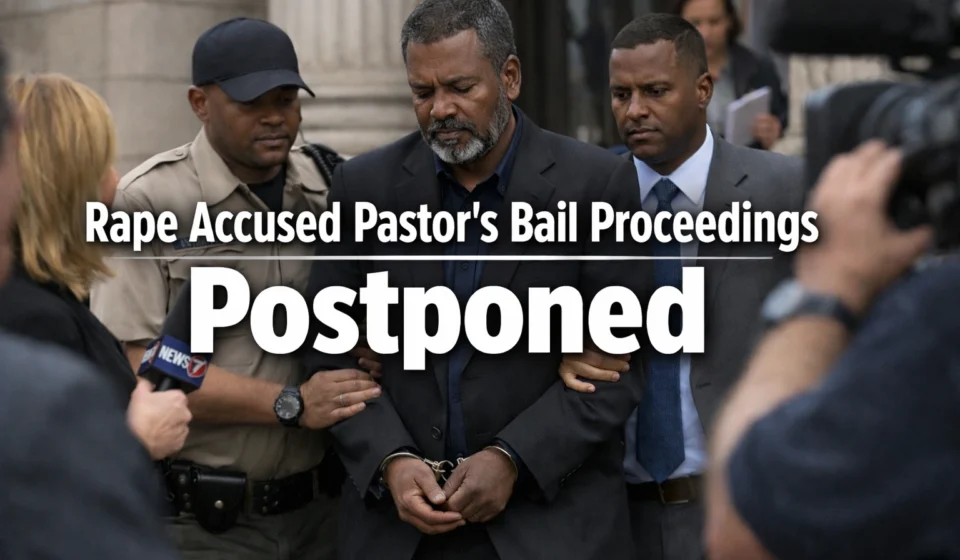
Justice Delayed Is Not Justice Denied! The Rape Accused Pastor’s Bail Proceedings Postponed Sparks a Community’s Call for Accountability

You know that sickening feeling when you hear about a child being hurt by someone they trusted? Now imagine that someone is supposed to be a pillar of the community—a church leader. That betrayal cuts deep. It shatters faith not just in individuals, but in the very institutions meant to protect the vulnerable.
But here’s the good news: the system is moving. The law is waking up. And communities are refusing to stay silent.
The rape accused pastor’s bail proceedings postponed in two separate but equally disturbing cases has become a rallying cry for justice in South Africa. While the delays are frustrating, they also represent something positive: the wheels of justice are turning, and no one—especially not a man of the cloth—is above the law.
Let me take you inside the courtroom drama, the community outrage, and the crucial legal steps that are finally putting predators in the spotlight.
Rape Accused Pastor’s Bail Proceedings Postponed: A Deep Dive into Two Disturbing Cases
When news broke that a rape accused pastor’s bail proceedings postponed at the Senwabarwana Magistrates Court, west of Polokwane, many Limpopo residents breathed a sigh of relief—mixed with frustration. The pastor, accused of raping two teenage girls, will have to wait until Tuesday next week to learn his fate. But here’s the silver lining: every day he spends behind bars awaiting his bail hearing is a day he cannot harm another child.
In a separate case that has rocked Soweto, another church leader’s formal bail hearing at the Roodepoort Magistrate’s Court has been postponed to 22 April so that the defence can gather further personal details. The 58-year-old man is accused of raping a 12-year-old girl at his parental home in Dobsonville on Good Friday—a day meant for reflection and prayer.
The rape accused pastor’s bail proceedings postponed might seem like a setback for those seeking swift justice. But let me explain why this is actually a positive development.
The Legal System at Work: Why Delays Aren’t Always Bad News
Look, I get it. When you hear about a child being violated, you want the perpetrator behind bars yesterday. But our legal system has a process for a reason—to ensure that justice is not just done, but seen to be done.
In the Dobsonville case, the defence requested additional time to gather “further personal details” about the accused. While this might sound like a stalling tactic, it actually ensures that the eventual bail decision is based on complete information. The court is taking this seriously—members of the public and the media were not even allowed inside the courtroom, indicating the sensitivity and gravity of the proceedings.
The rape accused pastor’s bail proceedings postponed means that prosecutors have more time to build an airtight case. It means investigators can gather more evidence. And it means that the victims and their families have more time to prepare for what will undoubtedly be a difficult legal journey.
Enough Is Enough!’: The Community Roar That Refuses to Be Silenced
Outside the Roodepoort Magistrate’s Court, something remarkable happened. A crowd of outraged Sowetan community members and representatives from several political organisations gathered to protest against the church leader’s bail application.
These were not just angry mobs. These were mothers, fathers, churchgoers, and activists who had finally had enough.
Leaders Stand Up: From MECs to Mayors
Gauteng Social Development MEC Nomantu Nkomo-Ralehoko stood in the billowing crowd and spoke not as a politician, but as a mother.
“When I heard about this case, my 21-year-old daughter was the first person who came to mind. I imagined the horror of such a thing being done to my own child.”
Her presence at the picket line sent a powerful message: this is not just a legal matter; it is a societal crisis that demands leadership at every level.
Build One South Africa leader Musi Maimane also made his voice heard, calling for the maximum sentence to be imposed if the accused is found guilty. “Enough is enough!” he declared—words that echoed through the crowd and beyond.
Even church leaders turned against their own. A female leader in the Methodist Church in Dobsonville—the very church where the accused served as a minister—spoke out with raw emotion:
“This is really disheartening, and we can’t take it anymore. We can’t be the pastors that always lie, that always become the perpetrators… We are supposed to build… to care… to love. Enough is enough!”
That, right there, is the sound of an institution cleansing itself from within.
No One Is Above the Law
Boitumelo Thage, national organiser of Not In My Name, delivered what might be the most important message of all:
“No person, regardless of their position in society, their profession, or their standing within any institution, is above the law. Leadership must never be used as a shield for wrongdoing.”
That principle—that a collar, a title, or a position of authority does not grant immunity—is the bedrock of a functioning democracy. The rape accused pastor’s bail proceedings postponed is a testament to that principle in action.
Councillor Margaret Arnolds, Speaker of Council in the City of Johannesburg, echoed the sentiment while also respecting the legal process:
“Let me state clearly: given the extreme seriousness of these allegations and the profound harm inflicted on a minor, I sincerely hope that the court, in exercising its discretion, rejects the bail application.”
Arnolds added a crucial note of balance: “While I fully respect the independence of our judiciary and the fundamental legal principle that every accused person is presumed innocent until proven guilty, I believe that offences of this nature demand the highest level of caution.”
The Chilling Details: What Allegedly Happened on Good Friday
To understand why the rape accused pastor’s bail proceedings postponed has sparked such outrage, you need to know what the community believes happened.
According to reports, a 13-year-old girl was allegedly kidnapped and raped by a 56-year-old church deacon over the Easter weekend in Dobsonville. The teenager lived across the street from the accused. Because about 100 homes in the area had no electricity due to transformer issues, the man would let neighbours use his house to boil water, cook, and charge their phones.
Around 7pm on Good Friday, the teenager went to his house to charge her cellphone while he was having a party.
What followed is every parent’s nightmare.
A video circulated on social media showing the teenager lying naked on a study table, looking confused. An office chair next to her had what appeared to be blood on it. In the video, a woman can be heard shouting at the man and accusing him of raping the high school learner.
One neighbour, Phakalime Mkhasimbe, expressed the deep sense of betrayal felt by the community:
“Tshepo is good with economics. He understands it and can explain the markets in the simplest form for everyone to understand. He was a respectable man, and as a young man growing up in the township, I looked up to him.”
That is the tragedy of cases like these. The perpetrator is often someone admired, trusted, and respected—which makes the violation even more devastating.
The Broader Crisis: When Sacred Spaces Become Danger Zones
The rape accused pastor’s bail proceedings postponed is not an isolated incident. It is part of a disturbing pattern of sexual abuse within religious institutions across South Africa.
In Limpopo, a pastor was recently sentenced to life imprisonment for raping teens after church sermons. In Gauteng, another pastor accused of raping a 17-year-old church member was granted R2,000 bail—a sum many viewed as insultingly low. In Khayelitsha, a rape-accused pastor was denied bail entirely.
And who can forget the high-profile case of televangelist Timothy Omotoso? After eight years of legal battles and testimony from dozens of women, he was controversially acquitted on all 32 charges—a verdict that sparked nationwide outrage.
Pastor Thandanani Savhasa from the Apostolic Faith Mission condemned the abuse in the strongest possible terms:
“It is inhumane, it is evil. It is just heinous, it is a betrayal of trust, it is an abuse of position and power. Church leaders want the police to deal with the crime.”
The South African Council of Churches (SACC) has also spoken out, warning that acquittals and weak sentences “could further erode public confidence in the justice system, especially in cases of abuse and violence against women”.
The Positive Takeaway: A Community Awakened
Yes, the rape accused pastor’s bail proceedings postponed is frustrating. Yes, the victims and their families are suffering. Yes, the legal system moves slowly.
But here is what gives me hope.
Communities are no longer silent. Political leaders are showing up to protest. Church leaders are condemning their own. And the media is shining a bright light on cases that were once swept under the rug.
Every postponement, every court appearance, every media headline is another chink in the armour of impunity that has protected abusive religious leaders for far too long.
The rape accused pastor’s bail proceedings postponed means that the accused cannot simply pay his way out of trouble and disappear. It means the case remains active, the investigation continues, and the pressure on the system remains.
Most importantly, it sends a message to other would-be predators hiding behind collars and titles: the community is watching. The law is coming. And your days of exploiting trust are numbered.
Final Thoughts: Justice Is Coming
The rape accused pastor’s bail proceedings postponed is not a sign of a broken system. It is a sign of a system that is finally waking up. Delays are frustrating, but they are part of a process designed to ensure that when justice finally arrives, it is thorough, fair, and final.
The communities of Senwabarwana and Dobsonville have shown us what accountability looks like. They have refused to look away. They have demanded action. And they have reminded us that no amount of religious authority can shield a predator from the long arm of the law.
To the victims and their families: your courage in coming forward has sparked a movement. To the communities standing up: your voices are being heard. And to the accused: your day of reckoning is coming.
The rape accused pastor’s bail proceedings postponed is not the end of the story. It is the beginning of a new chapter—one where justice is not just promised, but pursued.
The wheels of justice may turn slowly, but they are turning. And they are turning in the right direction.